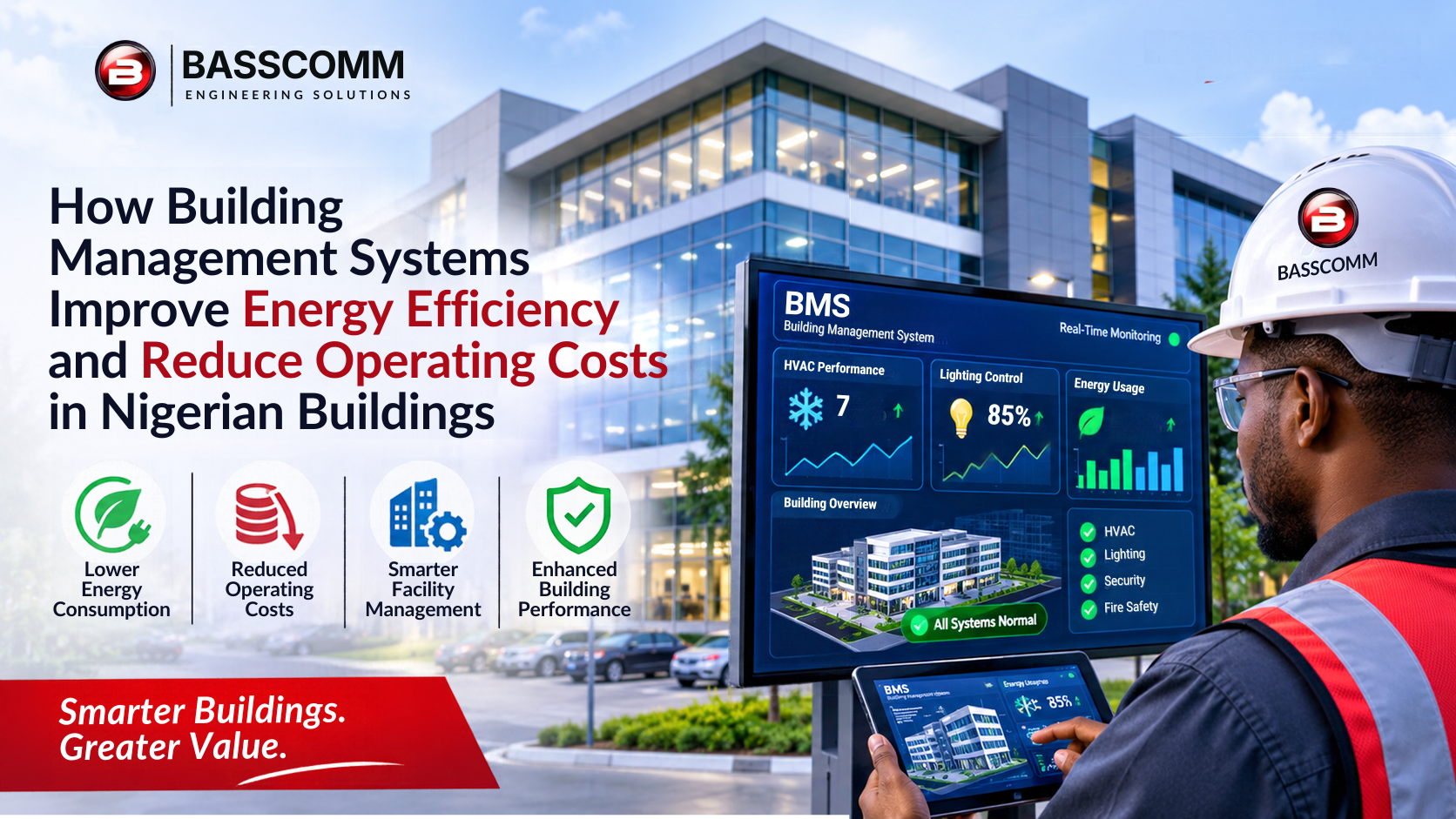
How Building Management Systems Improve Energy Efficiency and Reduce Operating Costs in Nigerian Buildings
For many businesses in Nigeria, operating a commercial building comes with significant and often unpredictable expenses. Electricity tariffs, diesel consumption, air-conditioning demands, equipment maintenance and the cost of keeping facilities comfortable and secure can place considerable pressure on operating budgets. When building systems are managed separately or run without proper monitoring, energy and resources can be wasted without being noticed.
A Building Management System (BMS) offers a smarter way to manage these demands. By bringing key building services together on a central monitoring and control platform, a BMS helps facility teams understand how a building is performing, identify inefficiencies and make informed adjustments. For Nigerian offices, hotels, hospitals, commercial complexes and industrial facilities, this can support better energy management, improved occupant comfort and more controlled operating costs.
Why Energy Efficiency Matters for Nigerian Buildings
Energy efficiency is especially important in Nigeria, where many facilities must plan around grid interruptions, backup generators, fuel costs and high cooling requirements. Air-conditioning can account for a substantial share of electricity use in buildings, particularly in facilities with long operating hours or large occupied spaces. Lighting, pumps and other equipment also add to the total demand.
Without reliable operating data, equipment may run when spaces are unoccupied, cooling may be set lower than necessary, or faults may remain undetected until they cause disruption. A properly designed BMS helps make these operating conditions visible, allowing facility managers to respond based on actual building needs rather than guesswork.
How a BMS Improves Energy Efficiency and Reduces Operating Costs
1. Optimises HVAC operation
HVAC systems are essential for maintaining indoor comfort, but they can consume significant energy when poorly controlled. A BMS can coordinate compatible air-conditioning and ventilation equipment using schedules, temperature readings and occupancy information. For example, cooling can be adjusted outside normal working hours or in areas that are not in use. This reduces unnecessary operation while helping maintain suitable indoor conditions.
2. Reduces energy waste through scheduling and automation
Lighting, pumps, fans and other connected equipment can be programmed to operate according to agreed schedules or control conditions. Lights can be switched off in selected areas after operating hours, while pumps and ventilation equipment can be sequenced to match demand. Automation reduces dependence on manual switching and helps prevent equipment from running longer than required.
3. Provides visibility into energy consumption
A BMS can present operating information and, where suitable meters are integrated, energy-use data through dashboards and reports. Facility teams can compare consumption across periods, identify unusual demand and investigate areas that may be using more energy than expected. This evidence supports better budgeting and more focused energy-saving decisions.
4. Detects faults earlier and supports preventive maintenance
Equipment that is operating inefficiently may use more energy before it fails completely. A BMS can generate alarms when selected conditions fall outside configured limits, such as abnormal temperatures, equipment status changes or system faults. Early alerts help maintenance teams investigate issues sooner, reduce avoidable downtime and plan maintenance before minor problems become expensive repairs.
5. Improves coordination between building systems
When compatible systems share information, facility teams can coordinate their operation more effectively. For example, HVAC schedules can align with building occupancy, while alarms and equipment status can be viewed from a central interface. This integrated approach can reduce fragmented monitoring and make it easier to manage complex facilities.
6. Supports better space utilisation and occupant comfort
Temperature, ventilation and lighting needs can vary from one part of a building to another. With suitable sensors and controls, a BMS can help operators respond to conditions in different zones instead of applying one setting throughout the entire facility. Better control can improve comfort while avoiding the energy cost of conditioning unused spaces.
7. Helps managers make data-led operating decisions
Historical trends and system reports can reveal recurring peaks, persistent faults and opportunities to adjust operating schedules. Facility managers can use this information to review settings, plan upgrades and measure whether energy-saving measures are delivering the intended results. Actual savings depend on the building, equipment, controls, usage patterns and quality of implementation.
Which Nigerian Facilities Can Benefit from a BMS?
Building Management Systems can support a wide range of facilities, particularly those with multiple mechanical and electrical systems or long operating hours. Examples include:
- Corporate offices and commercial buildings that need coordinated HVAC, lighting and power monitoring.
- Hotels and hospitality facilities where guest comfort and efficient room operations are important.
- Hospitals and healthcare facilities that require dependable environmental control and coordinated building services.
- Shopping malls and retail centres with large occupied areas, extended opening hours and varied cooling demands.
- Industrial and institutional facilities with pumps, ventilation, utilities and other equipment that require regular monitoring.
What Should Businesses Consider Before Installing a BMS?
A successful BMS project starts with understanding the building, its existing infrastructure and the client's operational priorities. Before selecting a solution, businesses should consider the following:
- Carry out a building assessment: Review existing HVAC, electrical, lighting, pumping and other relevant systems, including their condition and control capabilities.
- Define clear objectives: Identify whether the priority is energy monitoring, HVAC optimisation, centralised control, fault alerts, occupant comfort or a combination of these.
- Check compatibility and integration: Confirm that proposed controllers, sensors, meters and existing equipment can communicate reliably. Integration requirements should be established during design.
- Plan for scalability: Choose an architecture that can accommodate future extensions or additional systems where practical.
- Consider usability and training: Facility teams should understand how to use dashboards, respond to alarms, adjust approved settings and interpret reports.
- Work with experienced professionals: System design, installation, configuration, testing and commissioning should be handled by qualified specialists to ensure that the solution meets the building's requirements.
BMS and the Future of Smart Buildings in Nigeria
As organisations look for ways to manage energy, improve service delivery and operate buildings more efficiently, integrated building technology is becoming increasingly relevant. A BMS can provide a foundation for smarter facility operations by bringing information from selected building systems into one coordinated environment. When combined with appropriate energy solutions, reliable infrastructure and sound maintenance practices, it can help organisations build a clearer picture of how their facilities use resources.
However, a BMS is not a substitute for good facility management. Its performance depends on suitable system design, accurate sensors, correct configuration, staff training and ongoing maintenance. Businesses should also ensure that connected systems are secured appropriately and that access to building controls is managed responsibly.
Rising energy and facility operating costs make efficient building management an important business priority in Nigeria. By coordinating compatible building services, automating operating schedules, improving energy visibility and supporting earlier fault detection, a Building Management System can help organisations reduce avoidable waste and manage facilities more effectively.
The right solution begins with a proper assessment of the building and a clear understanding of its operational needs. With professional design, integration and commissioning, businesses can take a practical step towards more efficient, comfortable and manageable buildings.
Make Your Building Smarter with BASSCOMM
At BASSCOMM, we deliver engineering solutions that help organisations create safer, smarter and more efficient facilities. Our building and systems integration capabilities support businesses seeking better control, visibility and performance across their building infrastructure.
If you are planning a new facility, upgrading an existing building or exploring ways to improve operational efficiency, speak with BASSCOMM about a solution aligned with your building's requirements.
Email: crm@basscommgroup.com
Phone: +234 913 845 2783
Website: www.basscommgroup.com